Areas of work · 05
Brain fingerprinting
DeepBrainPrint finds scans of the same person across visits and scanners.
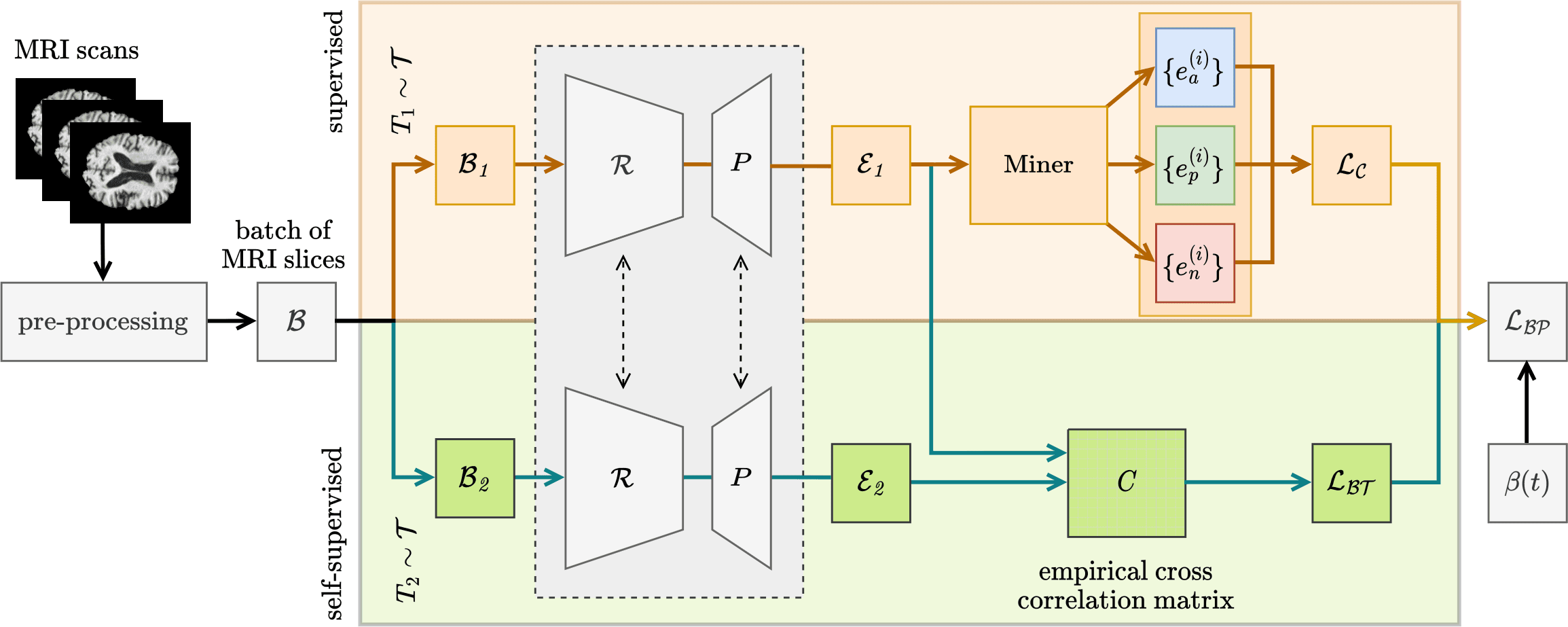
Large imaging datasets hold several scans of the same person, taken years apart or on different scanners. DeepBrainPrint turns each scan into a short numerical fingerprint, so scans of the same brain can be matched without relying on metadata.
It is trained with self-supervised and supervised contrastive learning, using image changes that mimic differences in contrast, age and disease (Puglisi et al., MIDL 2024).
Planning a neurology trial?
Tell us about your study and the imaging questions behind it.